Does your brand rank well in traditional search but remain invisible in AI-generated answers?
When someone searches for your category, ChatGPT might recommend a competitor, Perplexity might cite another company, and Google AI Overviews might highlight another brand entirely.
To spot these blind spots, you need to track your brand recommendation frequency, cited sources, which competitors are being recommended and visibility across different prompts. Standard SEO dashboards simply can’t measure these conversational outputs.
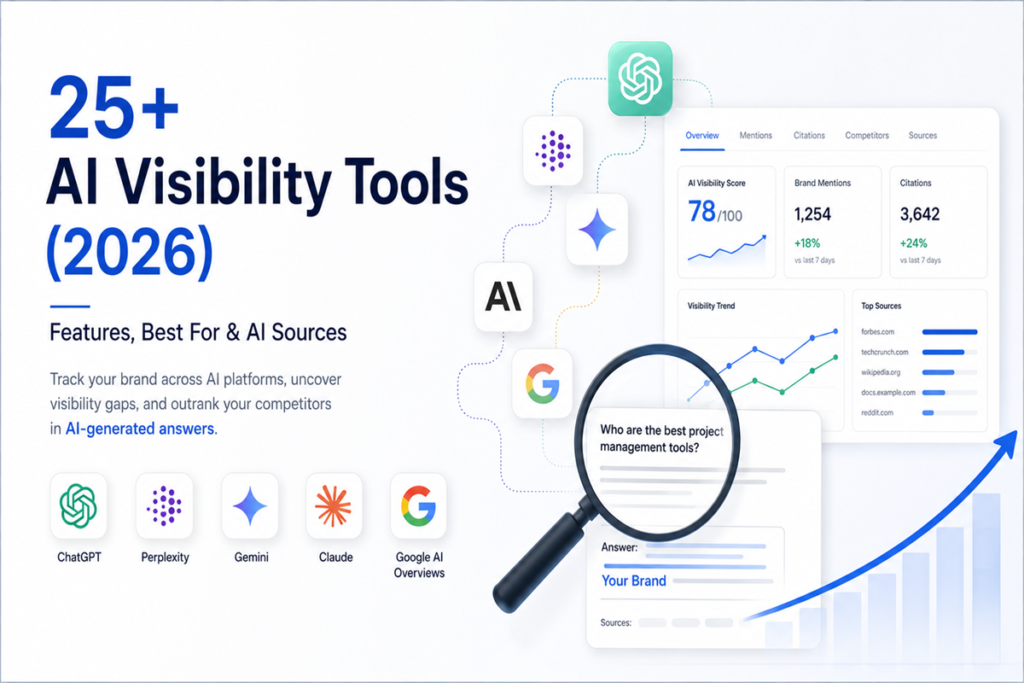
That’s where specialised AI visibility tools come in. Explore this guide to discover 25+ AI search visibility tracking tools to grow your presence across AI platforms and Google AI Overviews.
What are AI Visibility Tools?
AI visibility tools show how AI search platforms represent your brand when users ask relevant questions. Instead of tracking where your website ranks for a keyword, they show whether platforms such as ChatGPT, Perplexity, Gemini, Claude and Google AI Overviews mention your brand, recommend it or cite your content.
Depending on the tool, you can track brand mentions, competitor visibility, citations, prompts, sentiment, source domains and changes over time. Some AI search engine visibility tracking tools also identify content gaps or technical issues that may affect how AI systems understand and reference your business.
The Ultimate List: 25+ Best AI Visibility Tracking Tools
1. Waikay
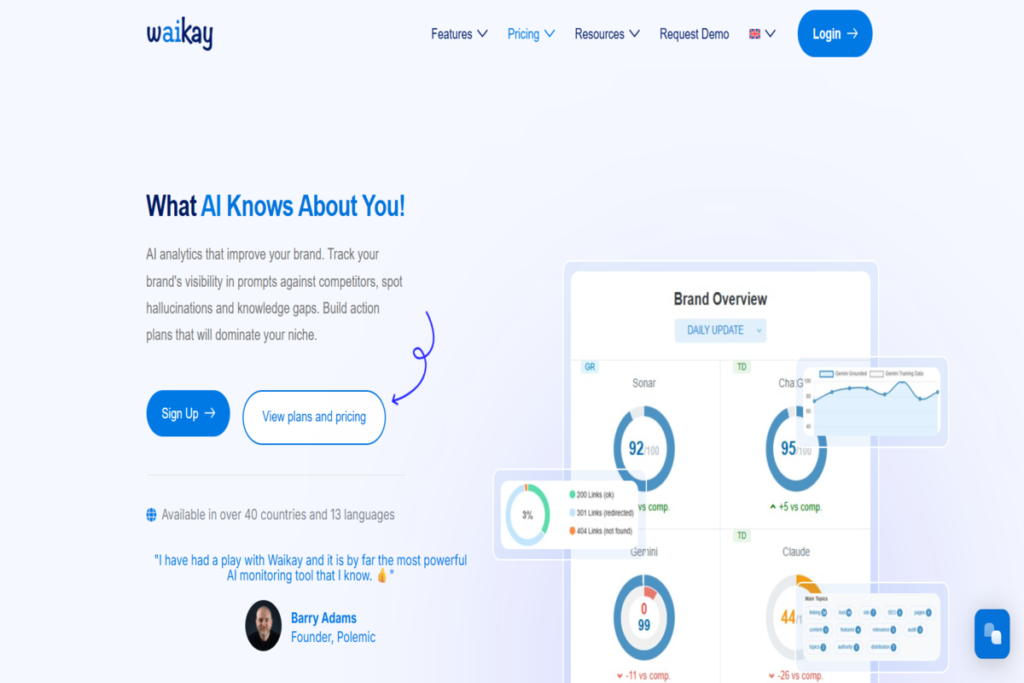
With Waikay, you can check not only whether AI mentions your brand, but whether the information it gives about you is actually correct. You can see the specific facts LLMs state about your business, flag inaccuracies for review, compare your brand-topic associations with competitors and evaluate the sources behind those mentions.
- Best for: Finding incorrect or misleading AI-generated information about your brand.
- Key features: Fact verification, topic-level competitor benchmarking, source-quality analysis, and ongoing brand monitoring.
- AI sources: ChatGPT, Claude, Gemini and Sonar
2. Ahrefs Brand Radar
Ahrefs Brand Radar is a top AI visibility tool that uses search-demand data to find AI conversations worth monitoring, rather than relying solely on manually created prompts. You can see which prompts mention your brand, where competitors appear when you do not, which domains AI cites and how your visibility changes across topics and markets.
- Best for: Large-scale AI visibility research across brands, competitors and high-demand topics.
- Key features: Share of AI mentions by global region, competitor gap analysis, citation tracking, response excerpts with your brand highlighted, custom prompt tracking and web-mention analysis.
- AI sources: ChatGPT, Gemini, Perplexity, Copilot, Google AI Overviews and Google AI Mode alongside Ahrefs search, web, YouTube, TikTok and Reddit data.
3. Profound
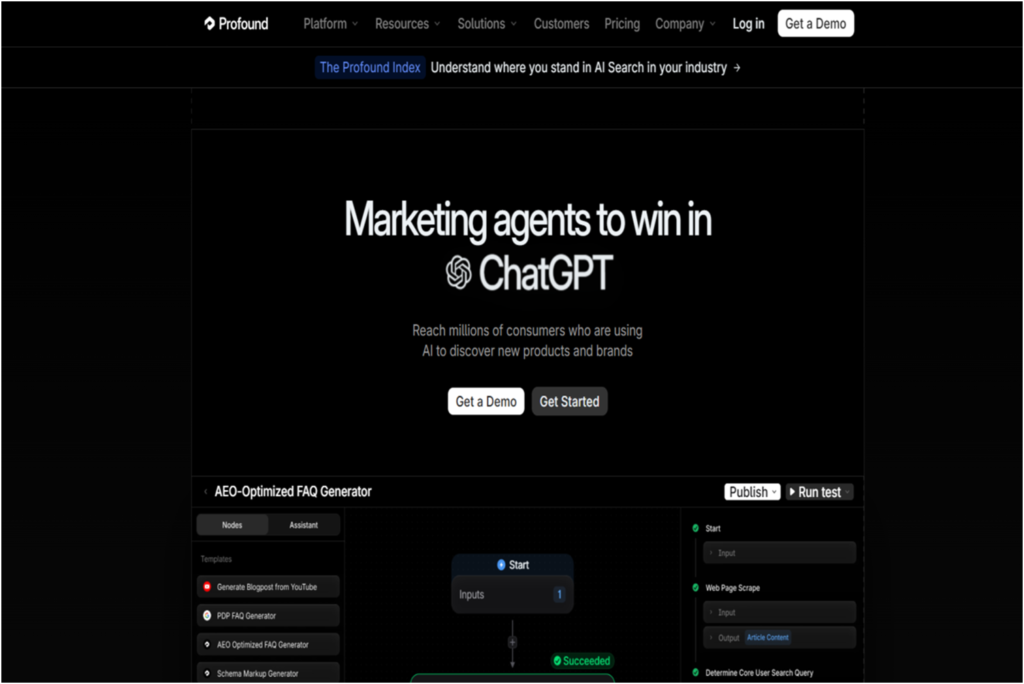
With Profound, you can combine real prompt data with AI-generated search insights to understand AI search at scale. You can explore what users ask, estimate AI search demand, identify the sources influencing brand mentions, monitor which pages AI agents crawl and cite, and track your share of voice across markets.
- Best for: Enterprise-level AI search intelligence and large-scale visibility tracking.
- Key features: Conversation Explorer shares estimated AI search volume, AI visibility tracking, citation analysis, crawler monitoring, ChatGPT Shopping visibility, competitor analysis, share-of-voice tracking and regional reporting.
- AI sources: ChatGPT, Perplexity, Microsoft Copilot, Google AI Overviews and Amazon Rufus
4. Mangools AI Search Grader
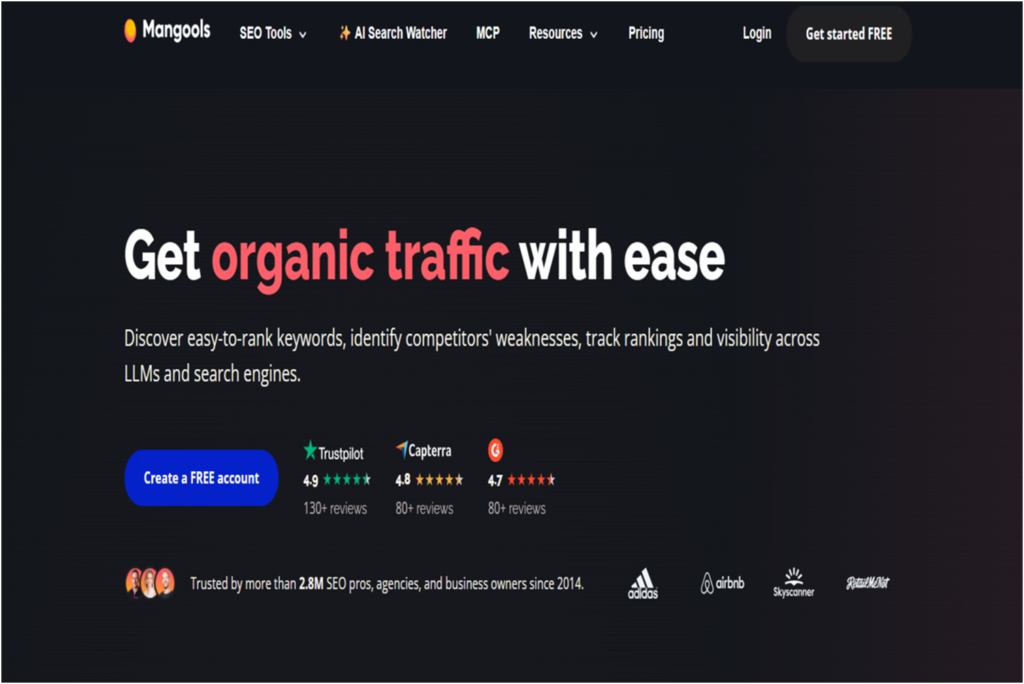
With Mangools AI Search Grader, you can quickly benchmark your AI visibility without committing to a dedicated enterprise platform. You get a 0–100 score based on how often your brand appears and where it typically ranks when AI includes it. You can also compare your performance with competitors.
- Best for: Free AI visibility checks and basic competitor benchmarking.
- Key features: 0–100 AI visibility score across multiple LLMs, visibility tracking in AI-generated answers, average ranking analysis when featured and competitor comparisons.
- AI sources: ChatGPT, Google Gemini, Claude, DeepSeek, Mistral AI and Meta’s Llama 4.
5. Peec AI
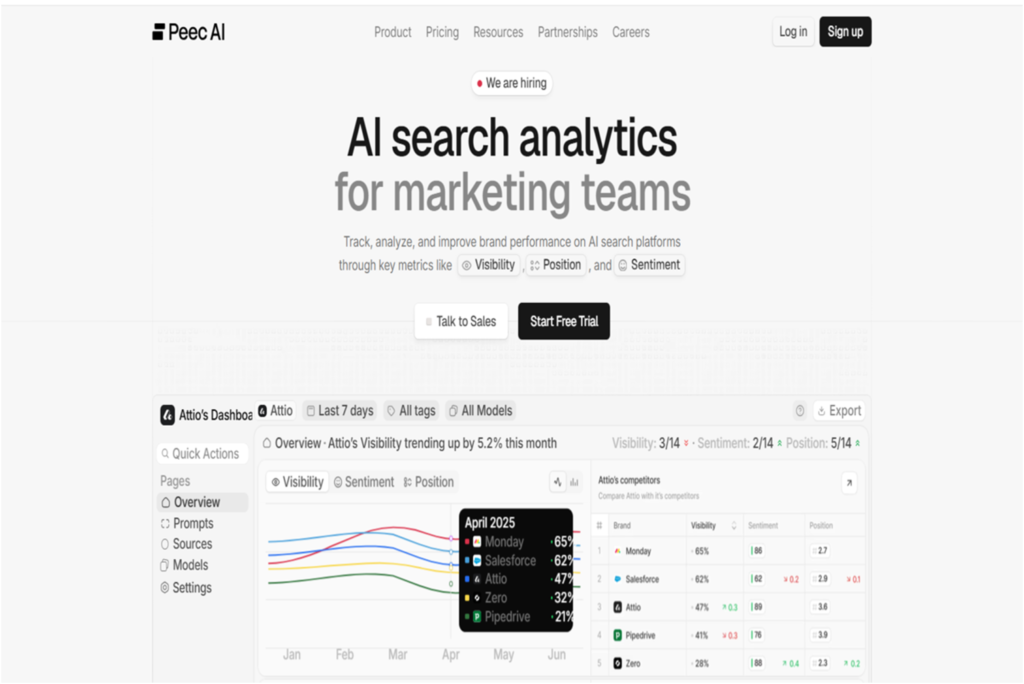
Among the best AI search engine visibility tracking tools, Peec AI tops the list owing to its ability to compare how different LLMs represent your brand instead of relying on visibility from a single platform. You can review mentions in context, identify publications that influence your visibility, compare your position with up to five competitors, track custom or suggested prompts, and monitor changes over time.
- Best for: Cross-platform AI search visibility monitoring
- Key features: Brand tracking across LLMs, competitor tracking, citation analysis, custom prompt tracking, source targeting and visibility alerts.
- AI sources: ChatGPT, Perplexity, Gemini, Claude, Llama and DeepSeek
6. RankScale
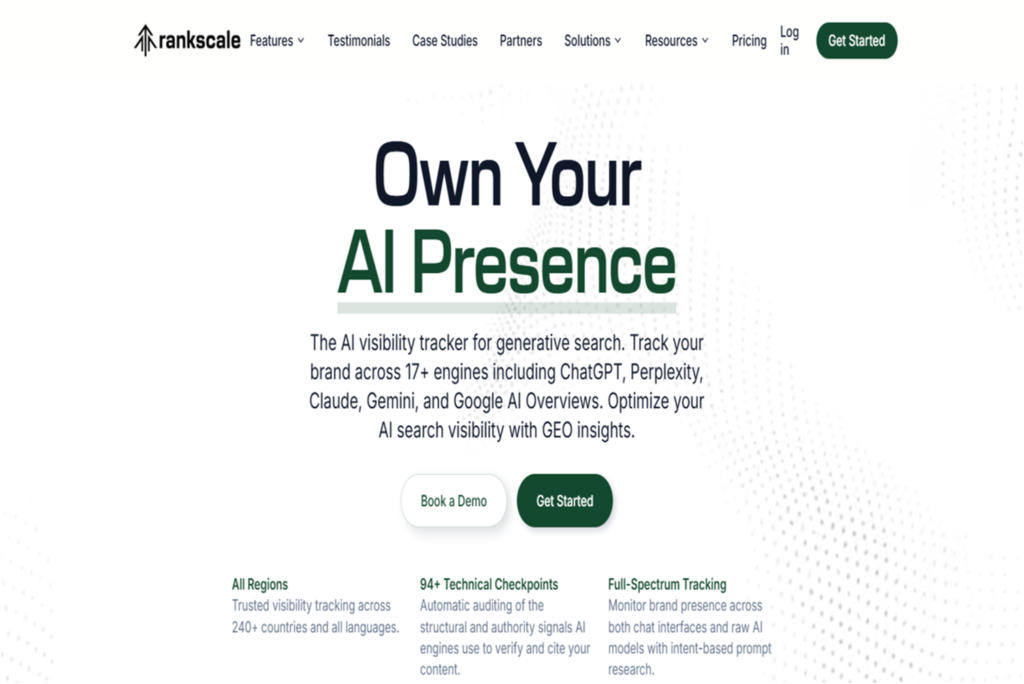
RankScale ranks among the budget-friendly AI search engine visibility tracking tools that connect traditional keyword research with AI visibility analysis. You can assess how well AI understands your website, see which sources influence brand mentions, review how AI describes your brand and identify visibility gaps. Its keyword-to-prompt engine also turns existing keyword sets into likely natural-language prompts that you can evaluate across LLMs.
- Best for: AI visibility audits, GEO analysis and turning keyword research into AI prompt strategies.
- Key features: AI readiness score, AI site auditing, citation analysis, sentiment tracking, competitor monitoring, multi-brand tracking for agencies and keyword-to-prompt analysis.
- AI sources: ChatGPT, Perplexity, Claude, Gemini, DeepSeek and Google AI Overviews
7. Morningscore ChatGPT Tracker
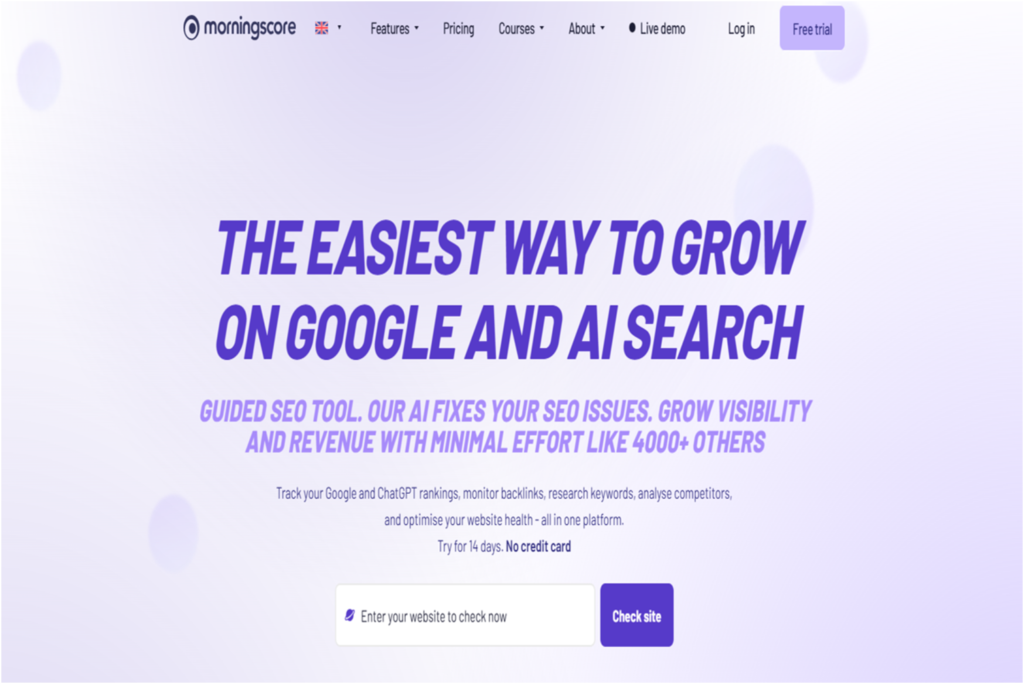
Like most of the tools on this list, Morningscore lets you enter your own prompts and track how your brand and competitors appear in ChatGPT responses over time. You can review response excerpts and compare your visibility through weekly checks.
- Best for: Simple weekly ChatGPT visibility tracking.
- Key features: Input custom prompts, track your brand and competitors, response excerpts and weekly visibility updates.
- AI sources: ChatGPT
8. Seer GenAI Answer Tracker
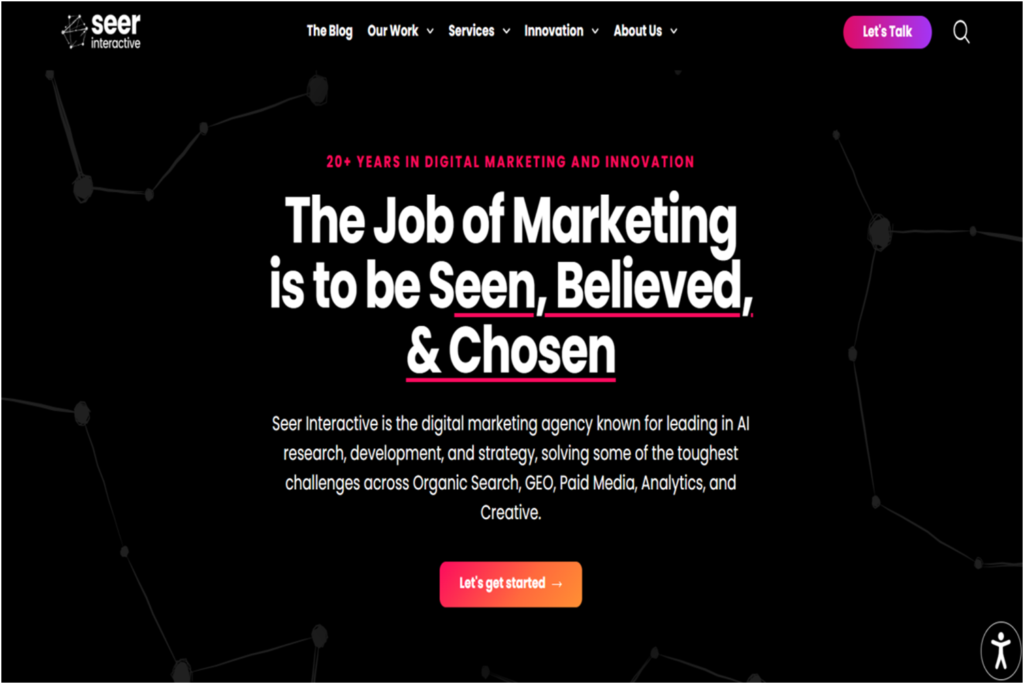
One of the best AI visibility tools is Seer’s; it focuses on the websites and other factors that influence your brand’s appearance in AI answers. Its analysis draws on more than 10,000 AI responses helping you identify influential sources, measure visibility across relevant topics and compare your performance with competitors.
- Best for: Custom AI visibility reports and source-influence research.
- Key features: Brand Signals Score quantifies your brand’s AI visibility, source influence analysis of which websites have the greatest impact, topic-level visibility, and competitor comparisons.
- AI sources: ChatGPT, Perplexity and Gemini
9. Xfunnel
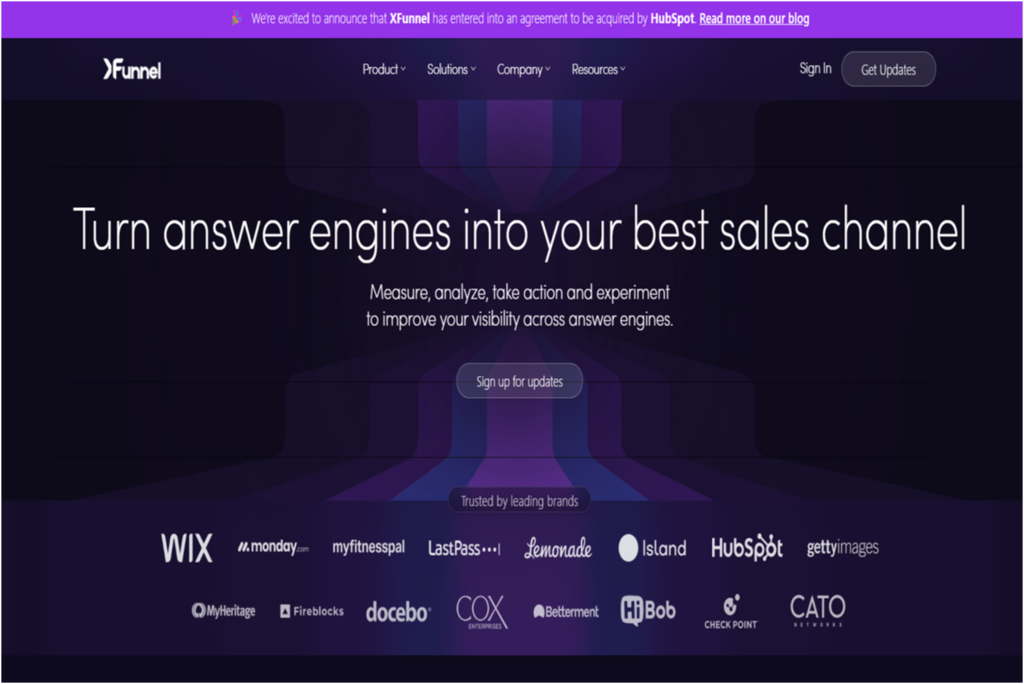
Xfunnel lets you break down AI visibility helping you identify where your brand appears. Through this, you can find segments where competitors have stronger visibility and use market opportunity scores to prioritise areas for optimisation.
- Best for: Segmenting AI visibility by market, journey stage and persona.
- Key features: Geographic segmentation, customer-journey mapping, persona analysis, competitor visibility gaps and market opportunity scoring to identify high-value markets for targeted optimisation.
- AI sources: ChatGPT, Perplexity, Gemini and Copilot
10. Limy
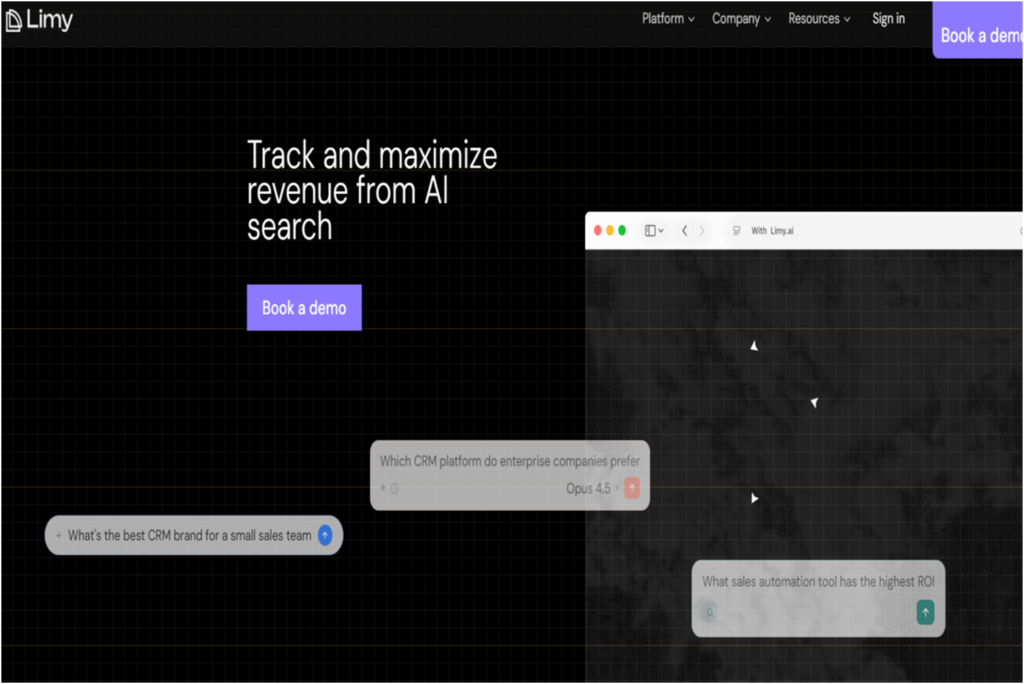
Limy lets you connect AI visibility with what happens after someone discovers your brand. You can see which prompts trigger recommendations which AI agents visit your website which pages they inspect and whether AI-driven discovery contributes to conversions. Its CDN-level tracking and pixel-based monitoring help you connect AI discovery with the customer journey.
- Best for: Full-funnel AI search measurement and conversion attribution.
- Key features: Cross-LLM visibility tracking, prompt-level analytics, prompt-to-conversion attribution, AI crawler intelligence and content recommendations tied to visibility and conversions.
- AI sources: Gemini, OpenAI and Perplexity
11. xofu
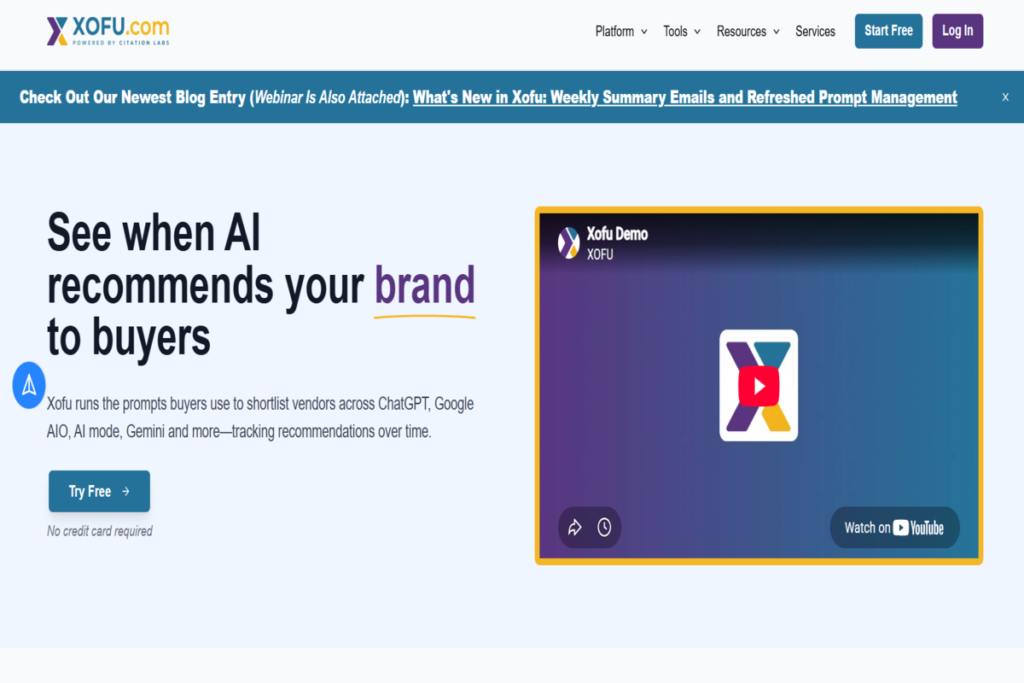
xofu narrows AI visibility tracking to the bottom-funnel buyer prompts where potential customers are comparing options and preparing to buy. You can track how your brand ranks against competitors in purchase-focused prompts, see whether AI recommends you or another brand and identify the sources behind those recommendations.
- Best for: Measuring bottom-funnel AI recommendations.
- Key features: Buyer-intent prompt tracking, competitive rankings across bottom-of-funnel prompts, brand recommendation monitoring and citation analysis to guide content strategy.
- AI sources: ChatGPT
12. Airank by Dejan AI
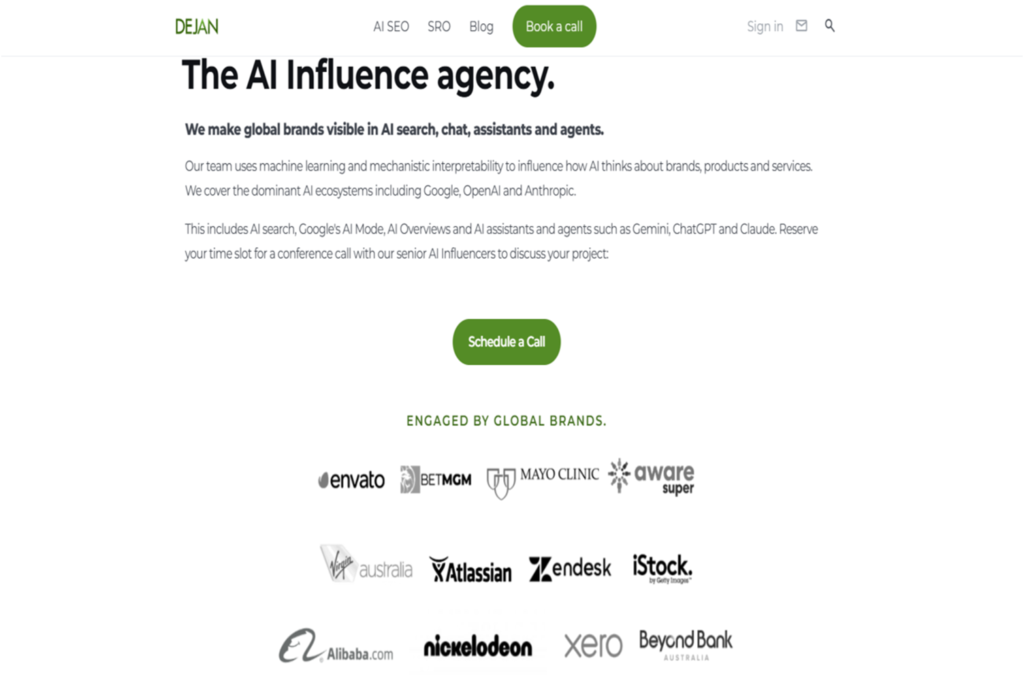
Airank looks at the relationships; you can see which entities AI associates with your brand and which brands AI connects with a specific entity. It uses DEJAN’s weekly Brand-to-entity and Entity-to-brand methodology, so you can track associations involving brands, people, products, services and events. You can also compare these associations with competitors across locations.
- Best for: Understanding how AI associates your brand with other entities.
- Key features: Brand-to-entity analysis, entity-to-brand analysis, competitor gap detection, and location-based tracking.
- AI sources: Google and OpenAI LLM responses including grounded/search-based and ungrounded/model-knowledge responses.
13. Scrunch AI
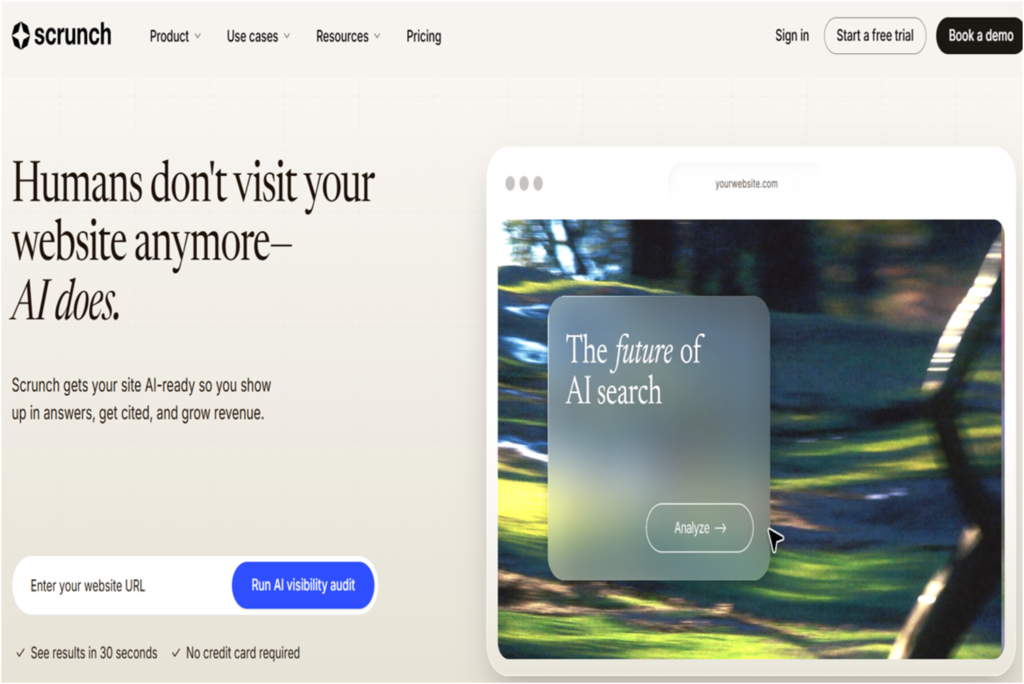
With Scrunch AI, you can understand how AI represents your brand, content and customer experience instead of looking only at mention counts. You can identify the first-party and third-party sources shaping that representation, find content gaps, test different user personas to see how different user profiles receive varied AI-generated brand messaging and see how competitors are positioned. You can then use its recommendations and machine-readable content layers to improve your AI presence.
- Best for: Enterprise AI optimisation and brand representation.
- Key features: AI visibility monitoring, content gap detection, source attribution, persona-based testing, competitive positioning, machine-readable brand and content layers and agent experience optimisation.
- AI sources: ChatGPT, Claude, Gemini, Perplexity and Meta AI
14. Am I On AI?
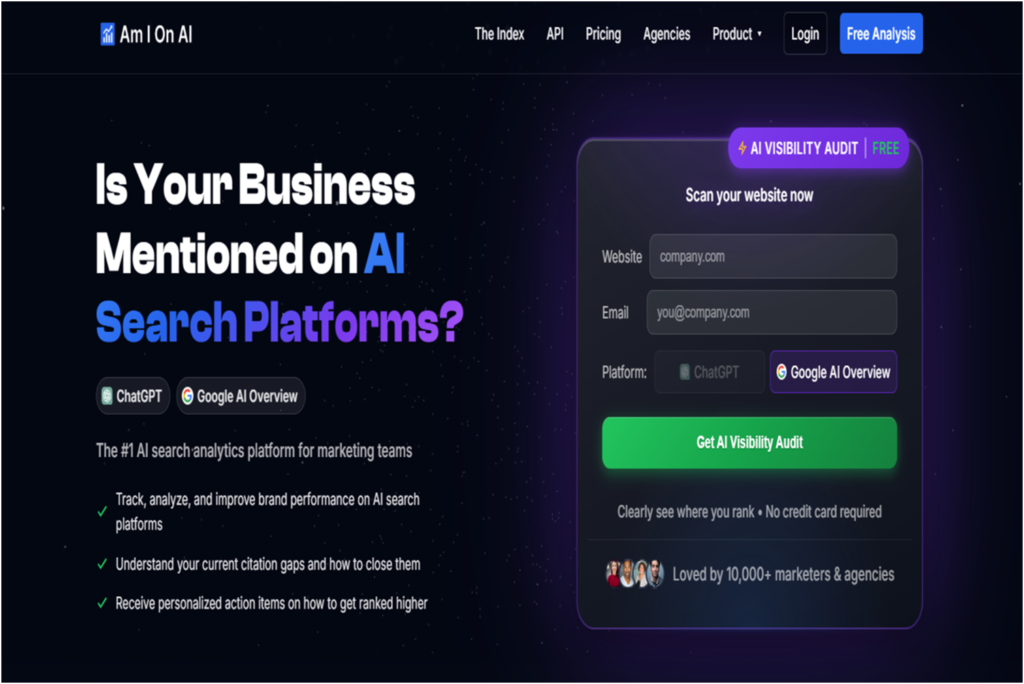
Am I On AI is best for quickly checking whether your brand appears when people ask AI about your category. In this AI visibility tool, you can review your visibility score, identify the proxy prompts that generate brand mentions, see which competitors appear in those answers and find the sources influencing your visibility.
- Best for: Initial AI visibility audits and competitor discovery.
- Key features: AI visibility score, tracking for up to 50 proxy prompts, competitor analysis, source analysis showing which websites influence AI mentions, topic-level references and week-over-week visibility tracking.
- AI sources: ChatGPT, Perplexity and Google Gemini
15. Otterly.ai
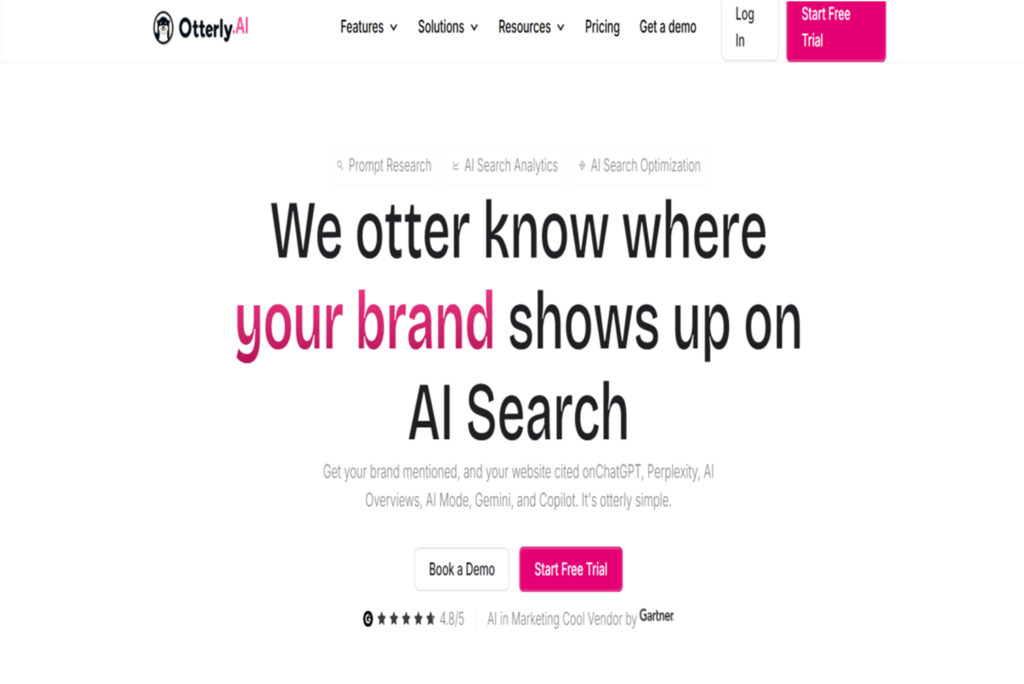
Otterly.ai focuses on automated AI search monitoring so that you can automate recurring AI search checks and quickly spot changes in your visibility.
- Best for: Ongoing AI search engine visibility tracking and change detection.
- Key features: Prompt tracking, brand visibility scores, citation monitoring, competitor reporting, position tracking within responses and historical response tracking.
- AI sources: ChatGPT, Perplexity, Google AI Overviews and Microsoft Copilot with additional coverage depending on your plan.
16. AIclicks
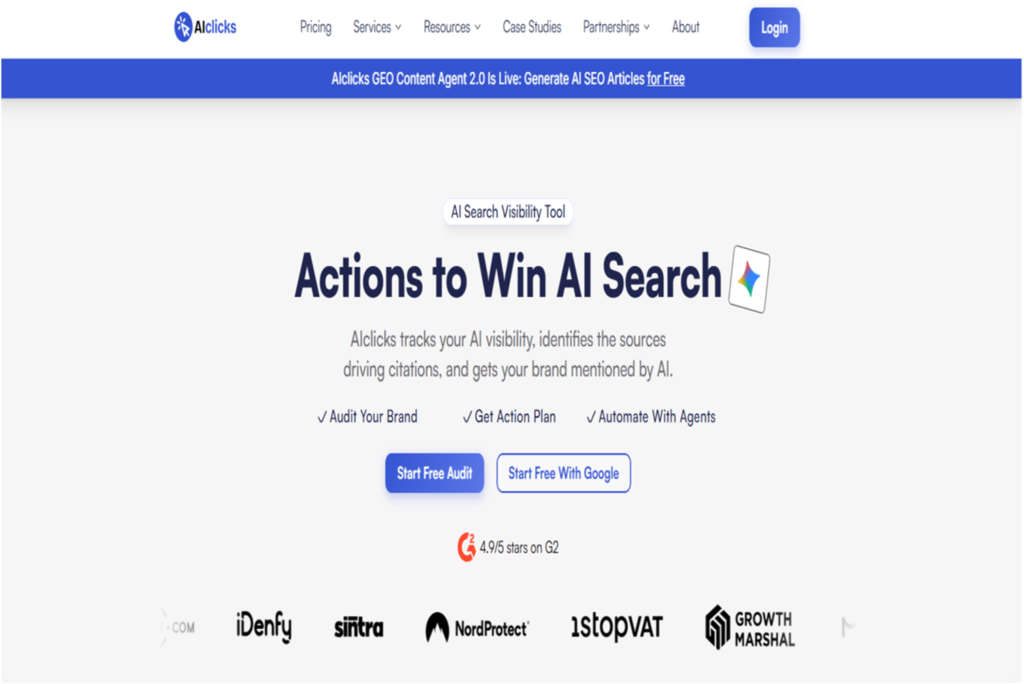
With AIclicks, you can track AI visibility at the prompt level, see which domains AI cites, and understand what type of content earns those citations, such as Reddit discussions, directories or listicles. You can also see how prominently your brand appears and use AI-assisted content creation to act on those findings.
- Best for: Teams that want visibility tracking and content creation in one tool.
- Key features: Prompt tracking, citation source analysis, brand prominence tracking and AI-assisted content generation.
- AI sources: 9 AI platforms including Grok, DeepSeek and Meta AI
17. Goodie.ai
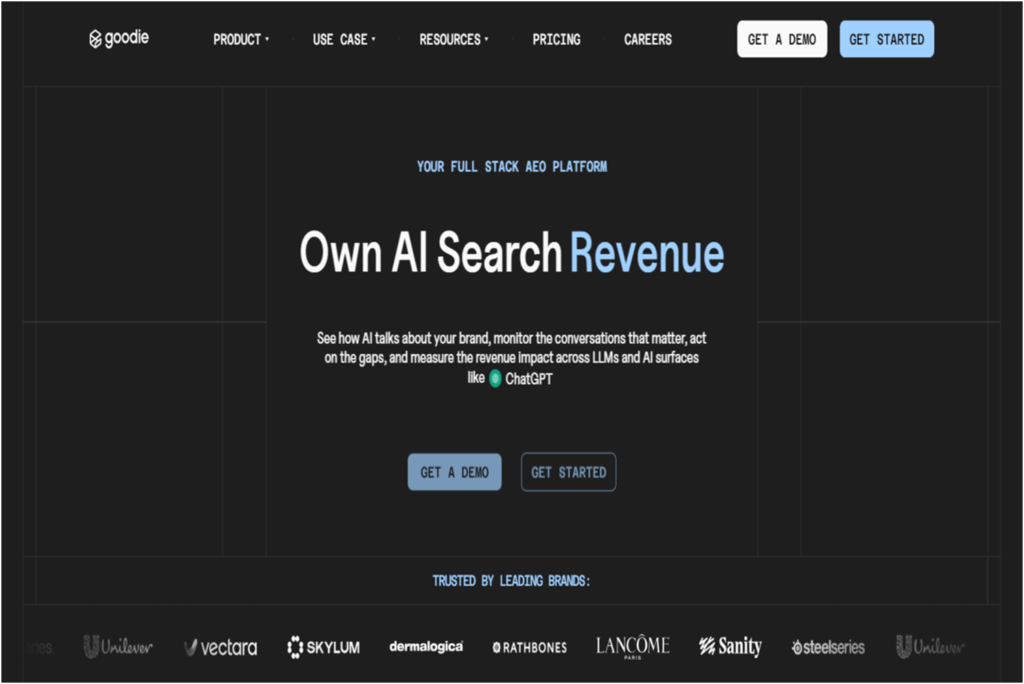
Goodie AI is one of the best AI visibility tracking tools combining tracking with the optimisation work needed to improve brand content. You can research prompts, monitor how AI engines mention your brand, track crawlers, improve technical elements such as sitemaps and LLM.txt and create AEO-focused content from one platform.
- Best for: Small businesses and digital marketers wanting simple AI visibility tracking tied to optimisation.
- Key features: Prompt research, visibility tracking, content suggestions, crawler monitoring, AEO content writing, and Optimisation Hub.
- AI sources: 11+ engines, including Grok, Rufus and Meta AI
18. Gumshoe AI
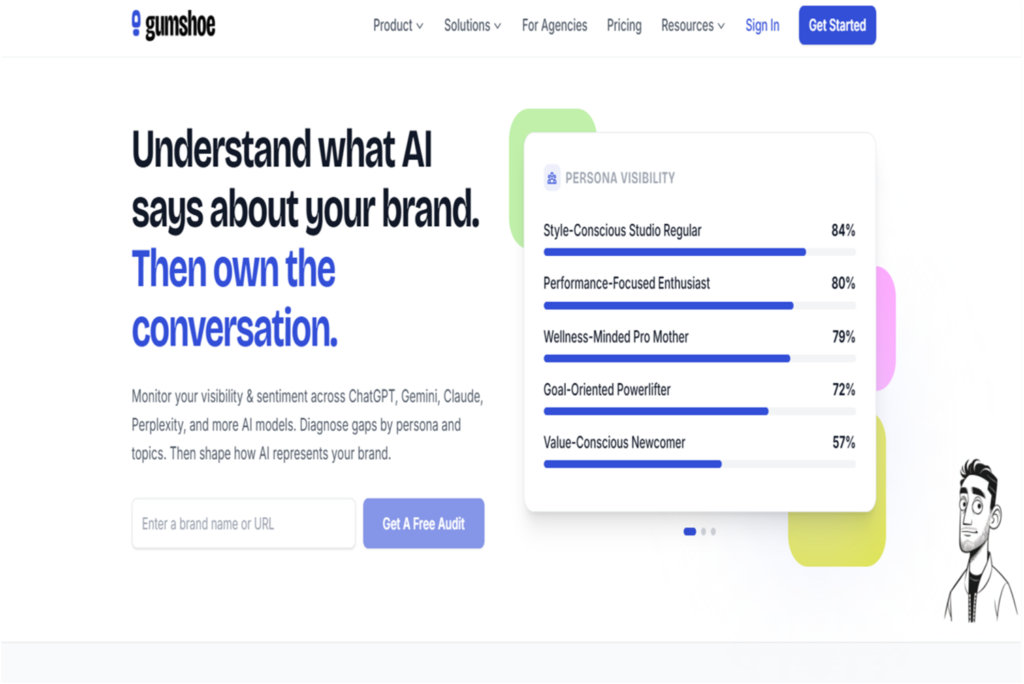
Use Gumshoe AI to generate realistic prompts from customer personas based on their roles, goals and pain points. You can then track how visible your brand is across those prompts and break down the results by persona, topic and LLM.
- Best for: Teams studying how different customer personas discover their brand in AI search.
- Key features: Persona-based prompt generation, visibility scoring by persona, topic and LLM, citation tracking, and topic analysis.
- AI sources: Perplexity AI Sonar, Google Gemini 2.5 Flash, OpenAI 4o Mini and Anthropic Claude 3.5
19. AthenaHQ
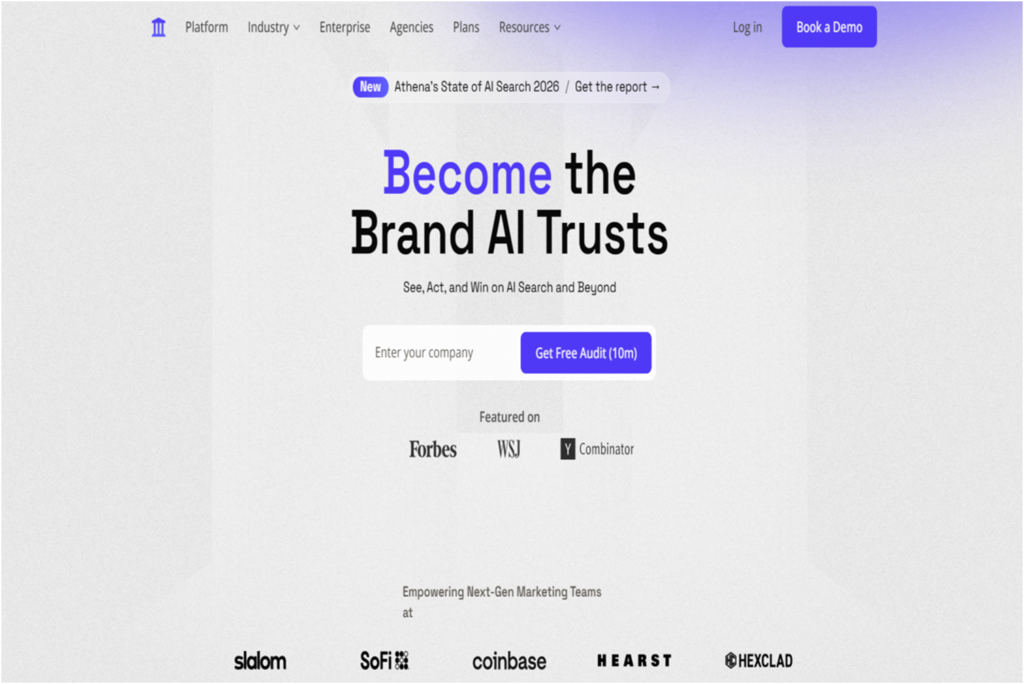
With AthenaHQ, you can track prompt-level visibility, citations and competitors, then turn the gaps you find into structured optimisation actions through its Action Centre. You can also connect visibility data with content gaps, traffic and ROI to understand where your GEO efforts can have the most impact.
- Best for: Growth-stage SaaS companies, mid-market brands, and teams building structured GEO strategies.
- Key features: Prompt tracking, competitor benchmarks, citation analysis, content gap analysis, traffic and ROI analytics, and Action Centre.
- AI sources: 8+ LLMs, including ChatGPT, Perplexity, Gemini and Google AI Overviews
20. SE Ranking AI Tracker
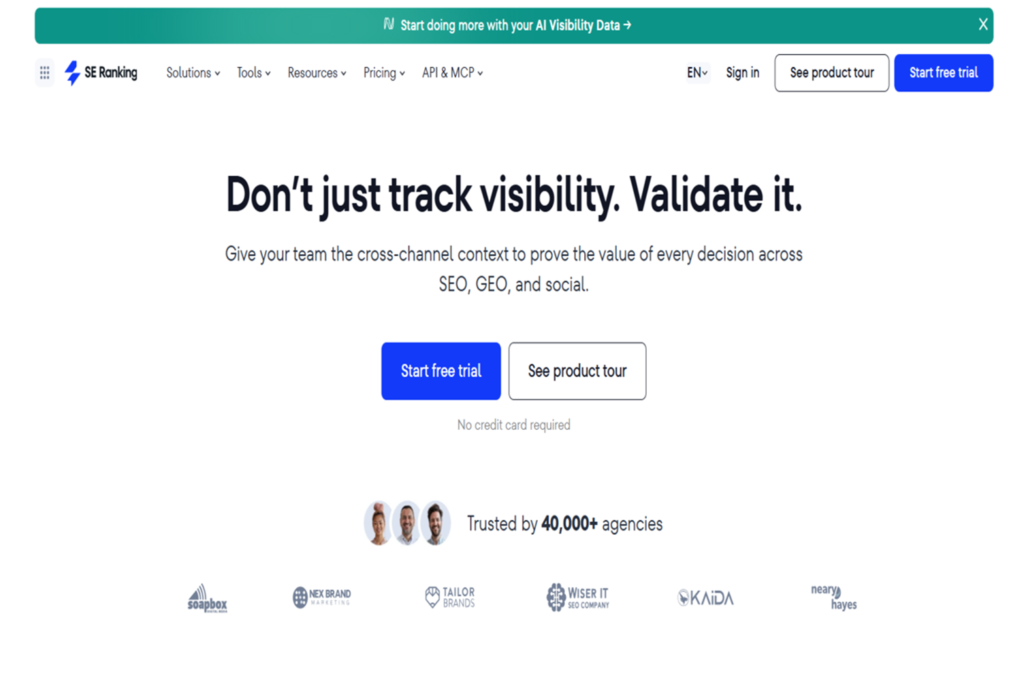
SE Ranking AI Tracker tracks AI-generated search features alongside your existing SEO data. You can track AI visibility, see which keywords trigger AI results, compare your domain with competitors, and follow changes in AI Overviews and AI Mode over time.
- Best for: Mid-sized teams that want organic search and AI visibility data in one SEO workflow.
- Key features: AI Overviews, AI Mode, competitor analysis, historical tracking, keyword-trigger monitoring and domain-appearance tracking.
- AI sources: ChatGPT, Perplexity, Gemini, Google AI Overviews and Google AI Mode
21. Knowatoa AI
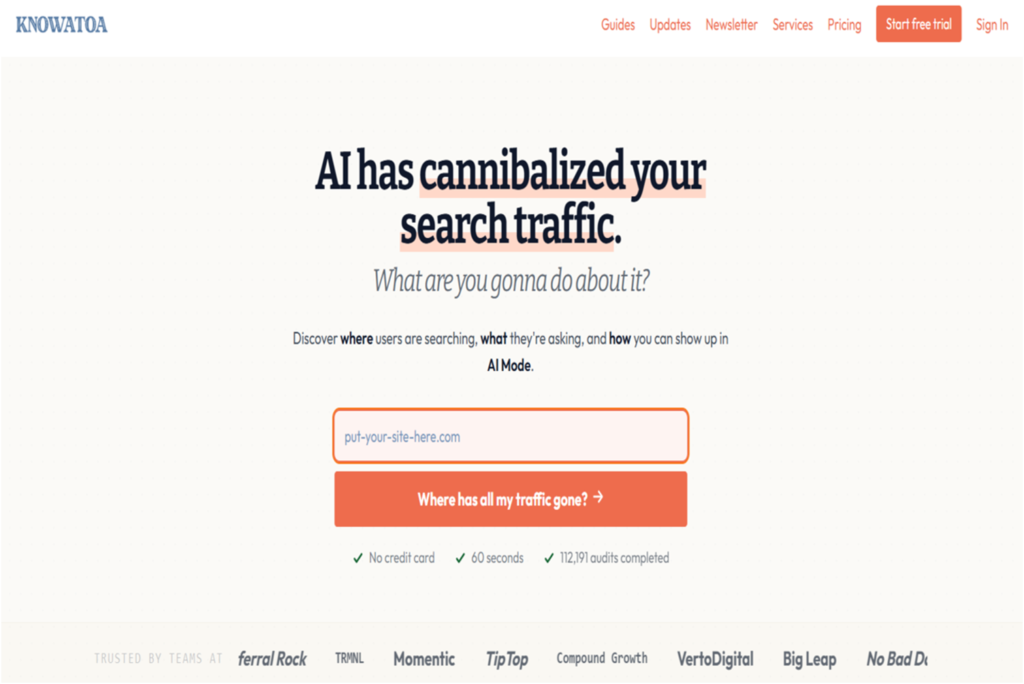
Knowatoa AI is among the popular AI search engine visibility tracking tools that help monitor how AI search systems describe and recommend brands. You can use citation and competitor data to understand where those descriptions come from and how your AI presence compares.
- Best for: Brands checking how AI describes and recommends their products.
- Key features: Brand monitoring, product description monitoring, sentiment analysis, AI search insights, citation tracking, and competitor tracking.
- AI sources: ChatGPT, Claude, Perplexity, Gemini, AI Overviews, Meta AI and AI Mode
22. seoClarity ArcAI
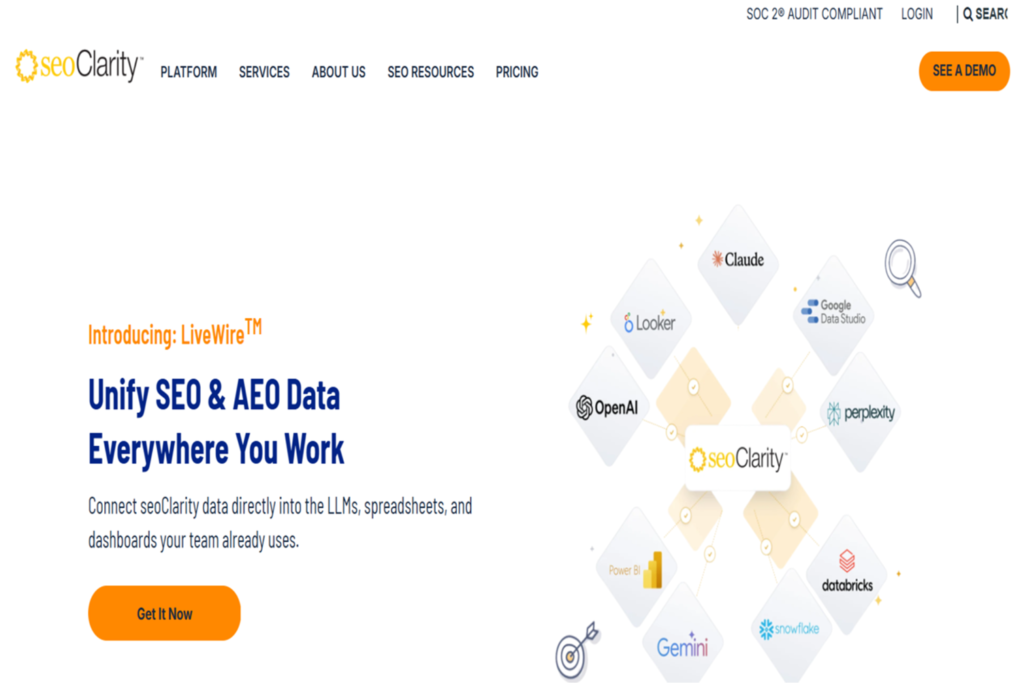
seoClarity ArcAI is a search visibility tool that can bring AI into the same workflow as your broader enterprise SEO efforts. You can monitor how your brand appears in AI answers, track AI bot activity, analyse sentiment and use optimisation recommendations to identify where you can improve.
- Best for: Enterprise SEO teams.
- Key features: AI search visibility tracking, AI bot activity monitoring, optimisation recommendations, and sentiment analysis.
- AI sources: ChatGPT, Gemini, Google AI Overviews and Perplexity
Other Notable AI Visibility Tools
Nevertheless, these tools are worth checking out too. They help you track AI mentions, citations, rankings and visibility across different AI search platforms.
| 23. Semrush AI Visibility | ChatGPT, Gemini and Perplexity AI |
| 24. Moz AI Visibility | ChatGPT, Gemini and Google AI Mode |
| 25. Rankability | Perplexity, ChatGPT, Google Gemini, Google AI Overviews, Brave Search and traditional Google organic results. |
| 26. LLMrefs | ChatGPT, Google AI Overviews, Perplexity, Gemini, Claude, Grok and more. |
| 27. ZipTie A.I. | ChatGPT, Google AI Overviews, Perplexity and four more AI engines |
| 28. Nightwatch LLM Tracking | ChatGPT, Claude, Gemini and Perplexity |
Final Thoughts
AI visibility tools give you a much clearer picture of how platforms such as ChatGPT, Perplexity and Gemini represent your brand. Waikay helps you check whether those answers contain accurate information, Ahrefs Brand Radar helps you find competitor and citation gaps and Profound lets you analyse AI search behaviour at scale. But knowing where you are missing is only useful if you do something about it. When you see competitors appearing in directories, product databases or other sources that AI uses, those gaps give you a clear place to start.
You can build that presence yourself, but finding relevant platforms, submitting listings, following up on approvals and managing accounts takes time. SaasyLaunch handles those submissions across 50 to 100+ platforms helping you get your product listed across the public web sources that AI models may use. This gives you a practical way to act on the distribution gaps you uncover along the way.
FAQs
What are the Best AI Visibility Tools?
The best visibility tool comes down to your requirements. Waikay helps you verify AI-generated brand facts, Profound tracks AI search at enterprise scale, Peec AI compares visibility across LLMs, and Otterly.ai monitors changes in tracked AI responses.
What are the Best AI Visibility Tools for AEO?
For AEO, you can check out RankScale, Scrunch AI, AthenaHQ and Goodie AI because they go beyond measuring visibility. You can use them to identify content gaps, analyse prompts and sources, monitor AI crawlers and improve content for AI-generated answers.