
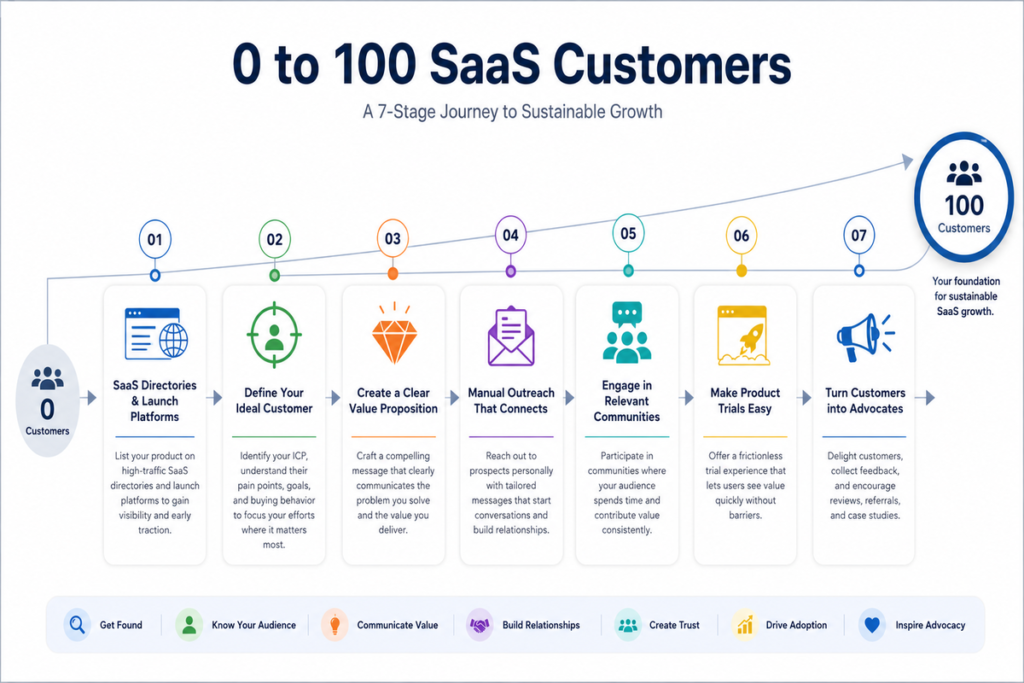
Getting your first 100 SaaS customers can be one of the most challenging stages of building a software business. At this stage, you are still wondering about your product-market fit, refining your product and building customer trust without much audience or marketing budget.
So, your initial set of customers aren’t just people who pay for your product. But they are building blocks for your business, helping you determine whether your solution addresses a real problem, which features matter most and what needs to change before you scale.
Explore this blog further to learn how to identify the right audience, reach potential customers, choose effective acquisition channels and turn your early users into long-term advocates.
Why are your First 100 SaaS Customers Important?
Your 100 Software-as-a-Service (SaaS) customers provide information that market research cannot. They prove your product-market fit, deliver critical feedback to improve your software where onboarding falls short and create the initial trust needed to attract future buyers.
Not just this, they can also serve as your first source of testimonials, referrals and case studies.
Reaching 100 customers can also represent a meaningful revenue milestone for an early SaaS business. According to research, 53% of SaaS and AI companies reach $10K MRR with approximately 100 customers paying $100 per month.
What’s the Step-By-Step way to get your First 100 SaaS Customers?
To get from 0 to 100 customers, start by listing your SaaS on startup directories and launch platforms. Then identify your ideal customer, use those insights to craft your message, reach prospects through your personal network and direct outreach and turn their interest into long-term relationships.
Step 1: List Your SaaS on Startup Directories and Launch Platforms
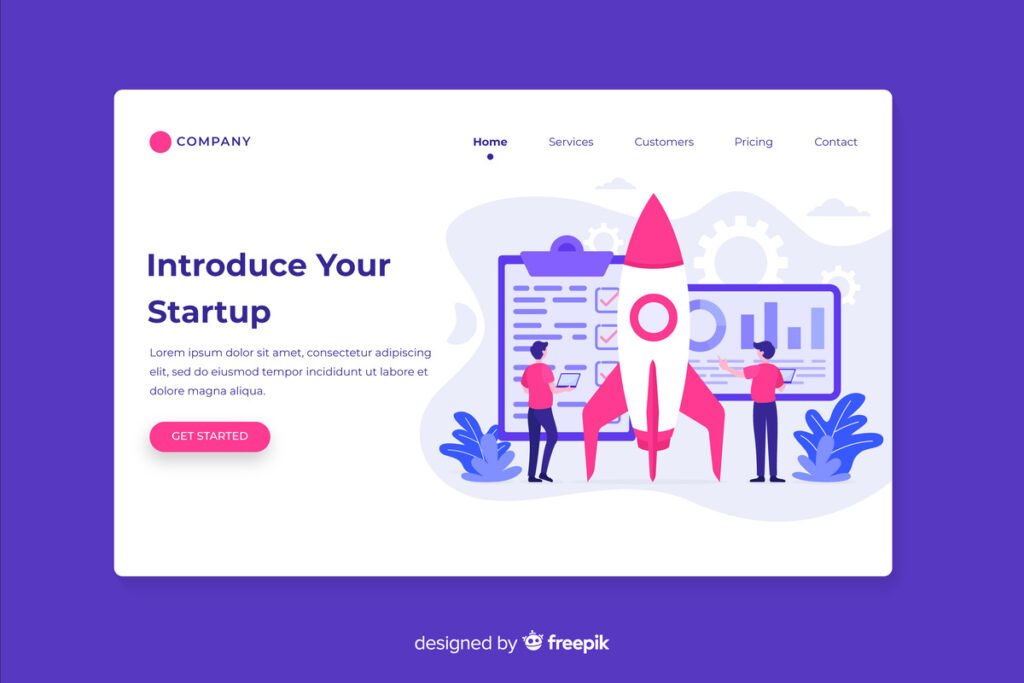
Start by listing your SaaS on platforms where people discover new products such as Product Hunt, BetaList, Hacker News, G2, Capterra and relevant SaaS directories. But submitting to each platform can take hours; Saasy Launch can help you do it in 10 minutes.
Just submit your details once and it handles the listings across 50–100+ platforms, so you can spend less time managing submissions and more time reaching out to potential customers.
Step 2: Define your Ideal Customer
Once your product is listed, look at where the interest is coming from and who is responding. This can help you understand which audience is most likely to need your product. Instead of trying to sell to everyone, target a niche audience. Identify who is most affected by the problem, understand their workflows and examine which tools they currently use that fail to address their pain points.
Go through competitors’ reviews on G2, Reddit and industry forums to uncover recurring problems and potential customers. Conduct 15–20 interviews and use the recurring feedback to guide your product improvements.
Step 3: Develop a Clear Value Proposition
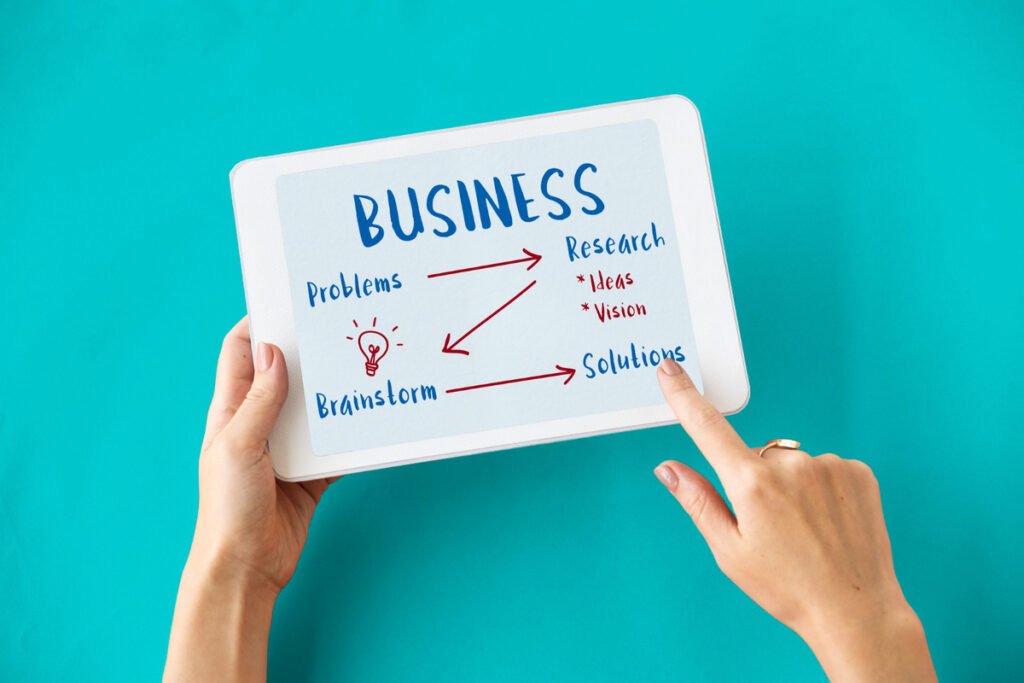
Once you’ve identified their problem, explain how your SaaS solves it without relying on vague jargon such as productivity reimagined. Be specific so potential customers immediately understand the value you offer.
Focus on the audience, the outcome and the problem you resolve. While ensuring message consistency across your homepage, landing pages, social profiles and outreach, all should highlight the same key benefit. Moreover, rather than calling your product another project management tool, focus on a specific objective such as automatically developing daily agendas for teams.
Bonus tip: Research 1-star reviews of competitive products, identify the reviewers and contact them with a solution to their exact problem.
Step 4: Begin with Manual Outreach
Now, deliver that message directly to prospects who match your ideal customer profile. To initiate a conversation, use LinkedIn, email, professional networks or personal relationships.
Step 5: Establish relationships with Relevant Communities
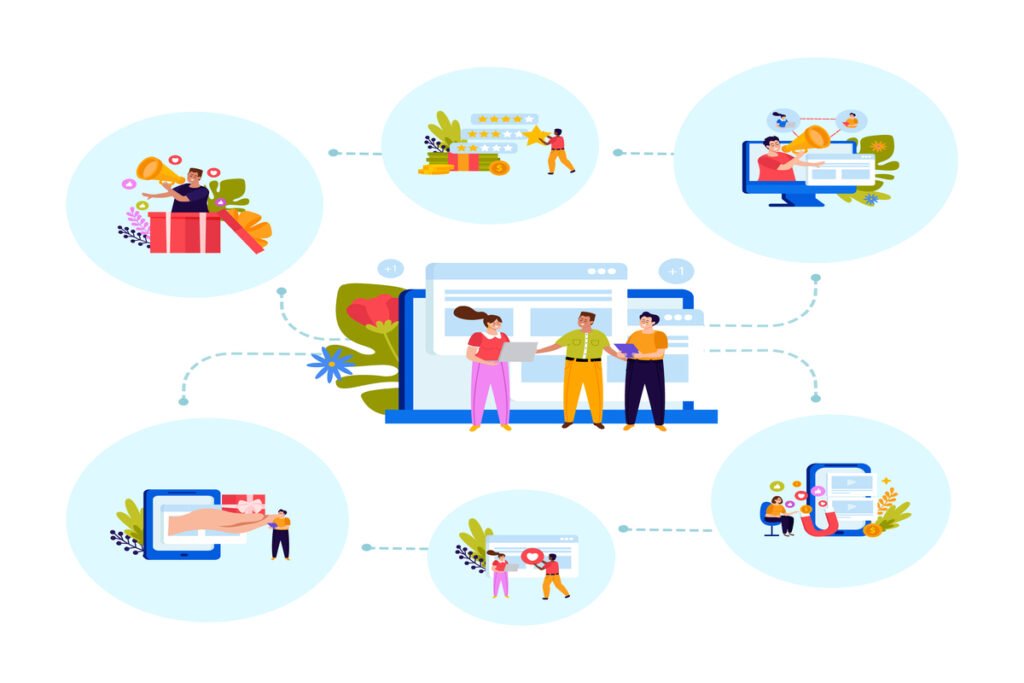
Outreach becomes easier when your target audience already recognises your name and understands your expertise. Thus, find networks where your target audience already spends time such as Reddit, LinkedIn groups, Slack, Discord, Indie Hackers or industry-specific forums.
Start by providing useful information then introduce your SaaS, answer queries, give relevant insights and participate in existing conversations.
Step 6: Make it Easy to Try Your Product
Once someone understands your product and trusts your brand, eliminate any extra friction from the signup process. A free trial, freemium account, early-access offer and referral programs can give prospects a low-risk way to try your SaaS.
If users struggle with onboarding or fail to realise the product’s major benefit, address those issues before ramping up your acquisition efforts.
Step 7: Convert Early Customers into Advocates
Your early customers can become one of your most effective acquisition channels, so stay in touch, respond quickly to issues and use their feedback to improve the product. When clients see tangible results, request testimonials and referrals.
What are the Mistakes you should avoid when getting your First 100 Customers?
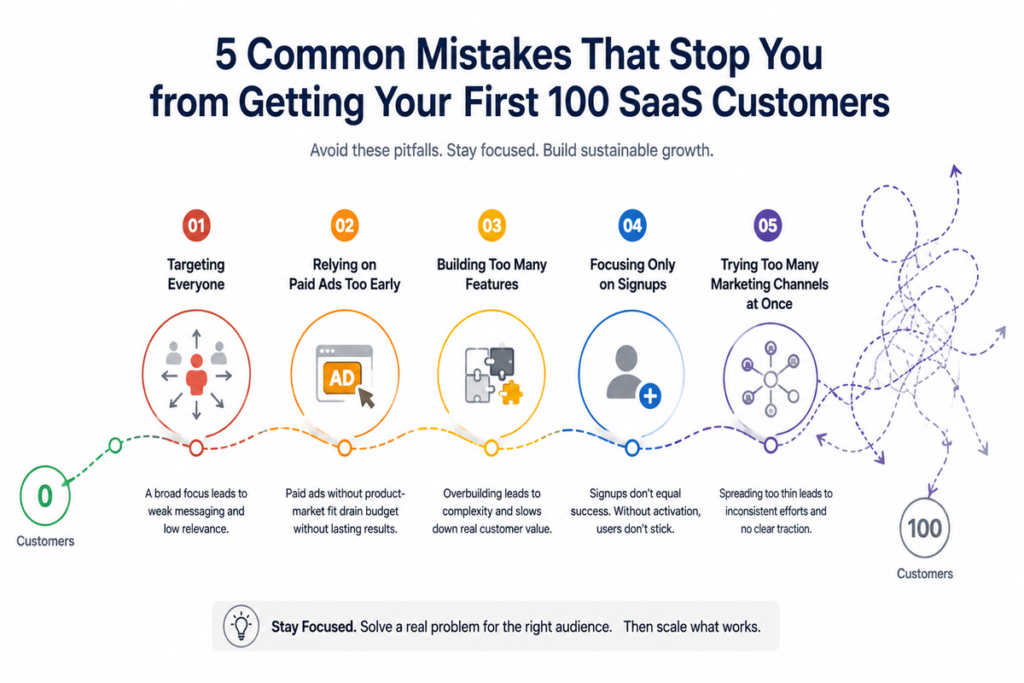
1. Targeting a large audience often results in unclear messaging and weak positioning.
2. Running paid advertising early cannot substitute for an unclear value proposition or poor product-market fit.
3. Unnecessarily building too many features instead of prioritising features based on repeated requests from ideal consumers and paying users.
4. Prioritising signups over retention means little if users do not return or continue using the product.
5. Trying every marketing channel instead go slow and focus on one or two then begin expanding to others.
Which are the Best Channels for acquiring early SaaS customers?
Different channels are effective for different phases and audiences, so the optimal balance is determined by where your potential customers already spend their time.
1. LinkedIn is effective for B2B outreach, networking and interacting directly with potential customers.
2. SEO and content marketing can attract high-intent visitors and increase organic traffic over time.
3. Startup and SaaS communities can help you attract early users and gain valuable product feedback.
4. Referrals provide warm leads due to their inherent trustworthiness.
5. Cold email allows you to target prospects who closely match your ideal client profile.
6. SaaS directories enhance discoverability and drive referral traffic for software products.
Conclusion
Understand that the final goal isn’t just to reach 100. It is to figure out why those 100 people chose you and decided to stay. This comes from understanding a specific audience, resolving their problem and engaging in enough conversations to learn what actually works.
So, start with a small group of potential clients, listen closely and apply what you discover to improve the product and positioning. Once your early consumers are receiving actual value, use their feedback, results and recommendations to lay the groundwork for your next stage of growth.